Plan my day

One More Day · Experiences

Hidden calas & secret beaches in Mallorca

Eight calas worth the walk. Not the ones on the postcards. These are the coves that stay quiet because getting there costs you something — a rough track, a long descent, or a boat. Here's exactly what each one asks of you.

Access score

One to five, judged on the walk in, the surface underfoot and how exposed you are once you're there. Three or more means proper shoes, not flip-flops.

Drive from Palma

Approximate, from the city centre to where you leave the car — not to the sand. Add 20–30 minutes in August, and more on the mountain roads.

Every cala has a map pin

The map link goes to the parking or trailhead, not a rough guess at the beach. Save it offline before you set off; signal drops in most of these bays.

Five of the eight are far easier from the water — anchor off, swim in, skip the hike entirely. See boat charters →

Ordered by effort, easiest first

Where to actually go

Showing all eight.

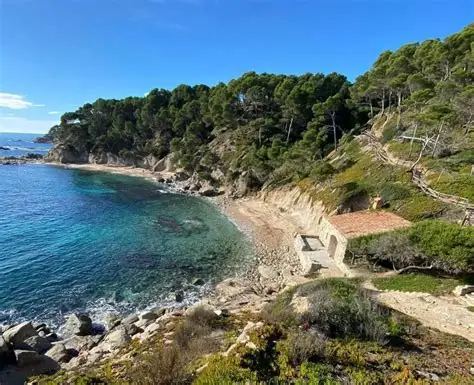
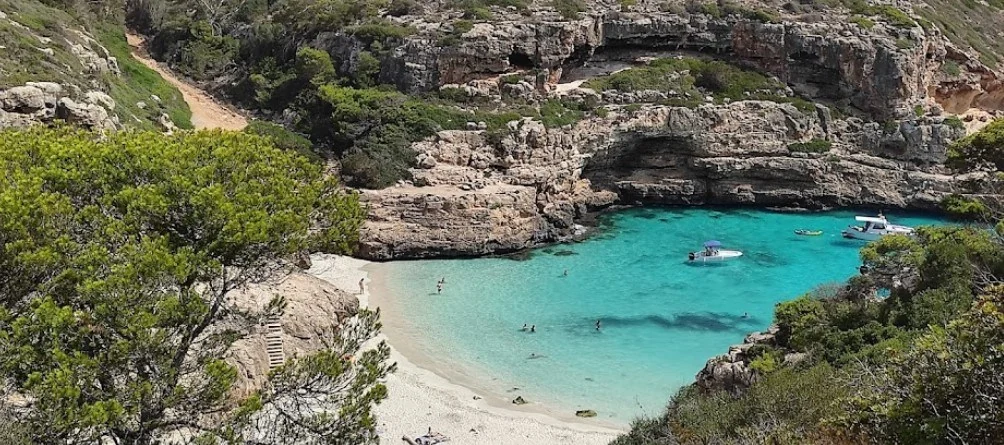
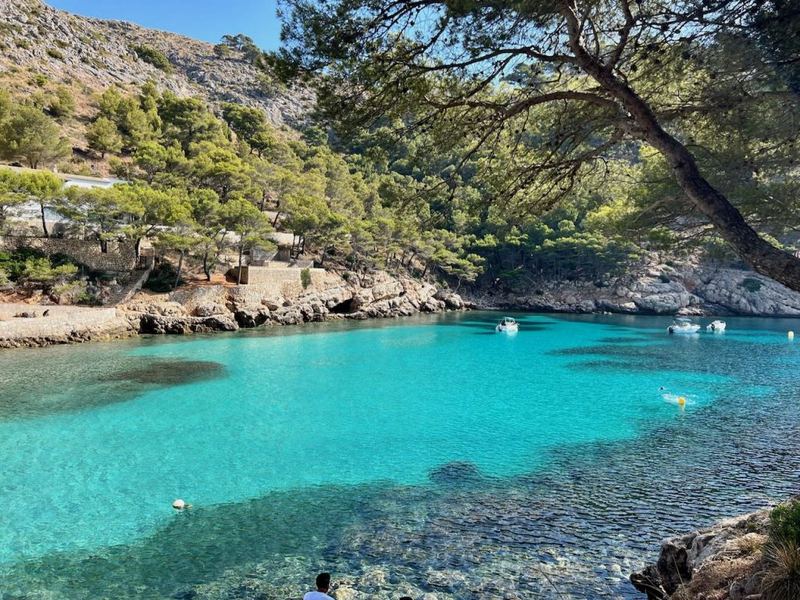
The clear turquoise water of Caló d'en Monjo, a narrow limestone cove near Calvià

Calvià · south-west coast

Caló d'en Monjo

The closest thing to a secret cove within half an hour of the city. No sand — smooth stones and water so clear you can count the fish from the rocks. Ten minutes down a dirt track from a small car park that fills by mid-morning and has been closed off entirely in some seasons.

2 / 5Easy walk, awkward parking
From Palma
26 km≈ 30 min
Walk in
10–15 minDirt track, then steps
Underfoot
PebblesNo sand at all
  • Water shoes
  • No facilities
  • Bring everything
  • Car park track is rough — not for a low hire car
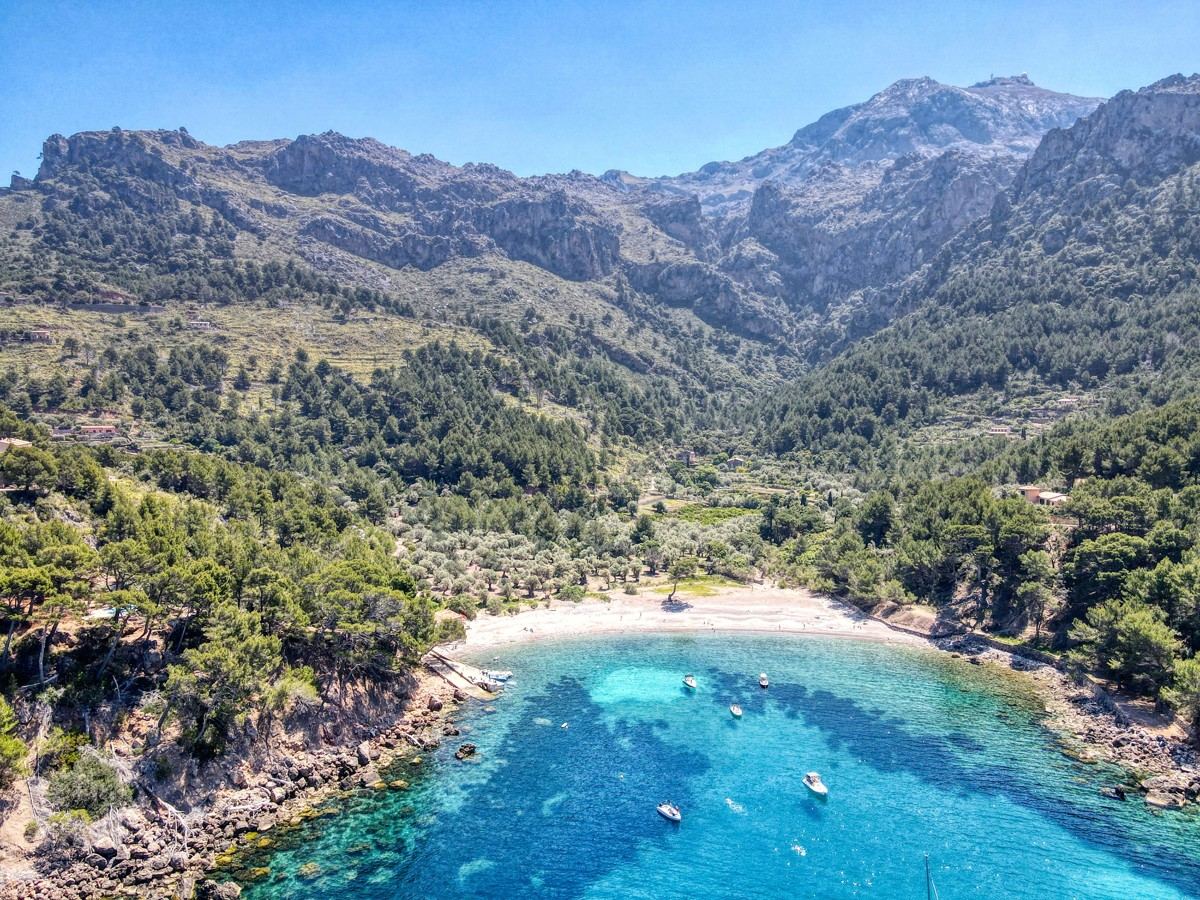
Cala Tuent seen from above, turquoise water below the Serra de Tramuntana

Escorca · Serra de Tramuntana

Cala Tuent

Sa Calobra's quiet neighbour, and the trade is a good one: the coaches all turn left, you turn right. A broad shingle bay under the mountains with one big tree that gives the only shade on the beach. The walk is nothing — the drive is the difficult part, and it's genuinely difficult.

2 / 5Easy on foot, hard on the nerves
From Palma
68 km≈ 1 h 20
Walk in
2 minPark and stroll on
Underfoot
ShingleDeep water quickly
  • Paid roadside parking
  • Water shoes
  • Restaurant above the bay
  • Hairpins, one-lane tunnels, cyclists — confident drivers only
Easier by boat The rocky shoreline and clear shallow water at Cala Estreta

Artà · north-east coast

Cala Estreta

Out past Cala Torta on a protected stretch where the road has given up entirely — the track is so broken that cars now stop at the top and everyone walks the last stretch, which is precisely why it stays empty. Some of the best snorkelling on this coast, with fish that clearly aren't used to company.

2 / 5Short downhill walk on a rough track
From Palma
85 km≈ 1 h 15
Walk in
15 minDownhill, 20 back up
Underfoot
Rock & sandSmall, sheltered
  • Mask & snorkel
  • Water shoes
  • No shade, no facilities
  • Leave the car at the top — the track will damage it
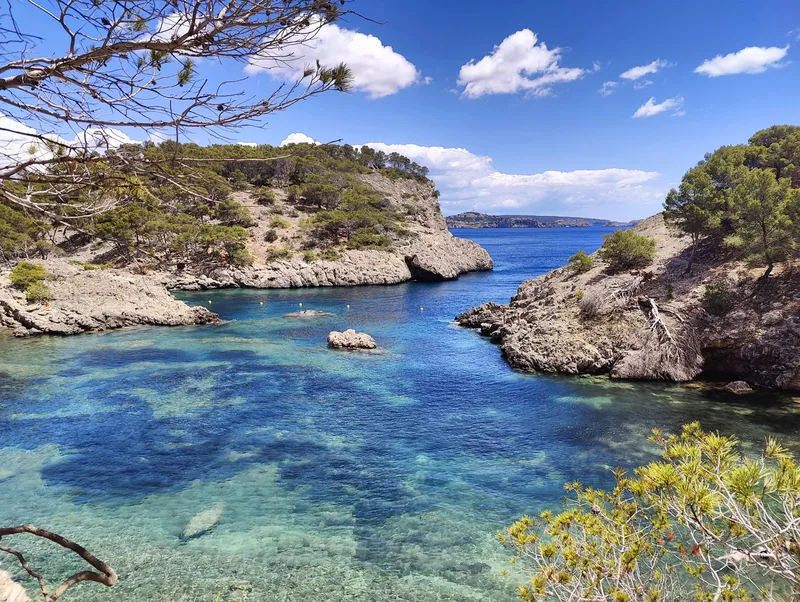
Easier by boat Clear turquoise water and pines at Cala Murta on the Formentor peninsula

Pollença · Formentor peninsula

Cala Murta

A pebble bay on the Formentor road with wild goats wandering the shoreline and a short path up to the Castellet viewpoint that most people never find. The catch is the road: in season it closes to private cars for most of the day and you take the shuttle instead — which is also why the bay is calm.

3 / 5Easy path, complicated logistics
From Palma
72 km≈ 1 h 10
Walk in
20–25 minShaded, gentle
Underfoot
PebblesWater shoes needed
  • Shuttle bus from Formentor
  • Paid parking at the beach
  • Nothing to buy on site
  • Road shuts to cars ~10:00–19:00 in season — fines are enforced
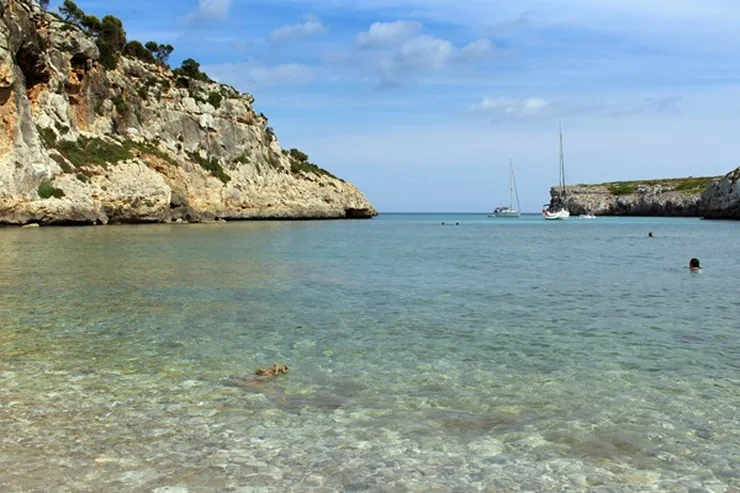
Easier by boat The narrow limestone inlet of Cala Magraner near Manacor, boats moored at its mouth

Manacor · east coast

Cala Magraner

One of four wild coves strung along the Manacor cliffs, and the one most people skip because the walk in is nearly three kilometres of flat scrub with nothing to look at until it opens up in front of you. Rounded stones at the back, sand at the waterline, and climbers on the walls above in spring.

3 / 5Long flat walk, fully exposed
From Palma
64 km≈ 55 min
Walk in
25–30 min≈ 2.9 km each way
Underfoot
StonesSand at the shoreline
  • 2 L water per person
  • Hat and shade
  • No toilets, no bar
  • No shade on the walk — avoid 12:00–16:00 in July and August
Easier by boat The sandy beach and anchored yachts at Cala Varques

Manacor · east coast

Cala Varques

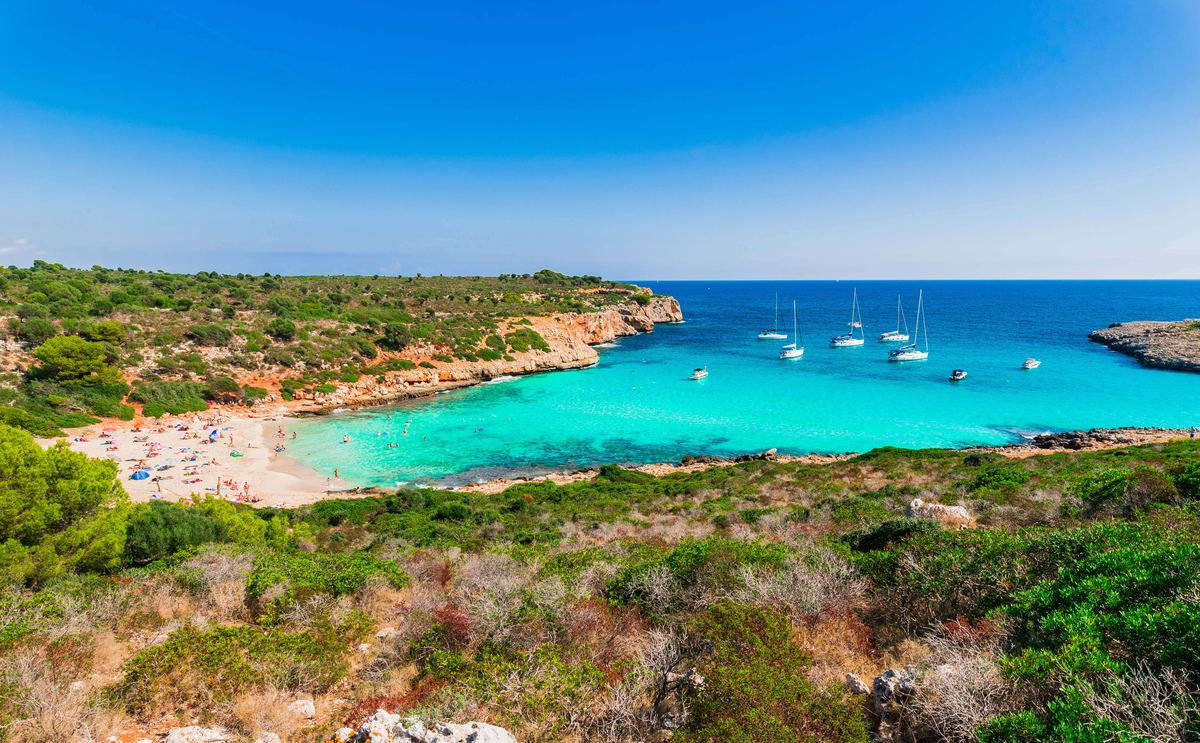
The one everyone means when they say hidden — sand, a natural rock arch around the headland and cliff jumps from three metres up to seven. It is no longer a secret in August, but it has no road, no bar and no sunbeds, which still filters out most of the island. You park on the verge and walk in over a wall.

3 / 5Half-hour walk with obstacles
From Palma
65 km≈ 55 min
Walk in
30–40 minLow wall to climb
Underfoot
Soft sandRare on this coast
  • Trainers for the walk
  • All food and water
  • Go before 10:00
  • Route crosses private land, and cars on the verge get broken into — leave nothing visible
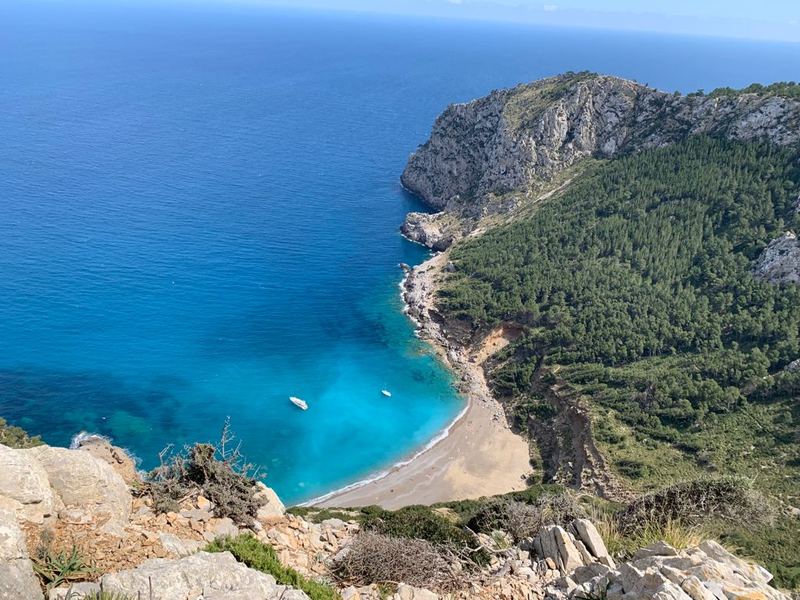
Easier by boat Platja des Coll Baix seen from the cliff path high above the bay

Alcúdia · Victòria peninsula

Platja des Coll Baix

A long crescent of white stones at the foot of a wooded headland, and the single most dramatic arrival on the island. It's also where plenty of people turn back: the descent is loose, steep and finishes with a scramble over boulders. Worth every minute if you've got the shoes for it. Absolutely not with small children.

4 / 5Steep, loose, and a scramble at the end
From Palma
62 km≈ 55 min
Walk in
45–60 minSteep descent, harder back
Underfoot
White pebblesNo shade on the sand
  • Walking shoes, not sandals
  • Hands-free backpack
  • Sun umbrella
  • Car park fills before 09:30 and the last stretch needs both hands free
Easier by boat The pale sand and turquoise water of Es Caló des Màrmols on Mallorca’s south-east coast

Santanyí · southern tip

Es Caló des Màrmols

The hardest cala on the island to reach on foot, and the emptiest because of it — a pale sand bay at the end of an hour or more along the coast from the Ses Salines lighthouse, over bare rock with no shade, no water and no way to cut the walk short. People do it in flip-flops and regret it by kilometre two. From the sea it takes ten minutes.

5 / 5A serious walk in full sun, both ways
From Palma
57 km≈ 55 min to trailhead
Walk in
60–120 minEach way, no shortcut
Underfoot
SandOpen to swell
  • Hiking shoes
  • 3 L water per person
  • Start before 09:00
  • Not for children, or anyone in July heat — and the inland shortcut crosses private land

The ones you've already seen

The famous ones, honestly

These are the Mallorca beaches that fill your feed before you land. Some of them deserve it. Some of them are a twenty-minute walk to stand shoulder to shoulder with three hundred people. We've said which is which — add any of them and we'll tell you the hour to go.

  • Worth it

    Es Trenc

    Campos · south coast

    Two kilometres of white sand and shallow turquoise water — the one that photographs like the Caribbean.

    Big enough to absorb a crowd, but the parking fills by mid-morning and there is very little shade.

    Map
  • Worth it

    Cala Mondragó

    Santanyí · southeast coast

    Inside a protected natural park, so it kept the pine-backed feel while staying classically beautiful.

    Copes with crowds far better than the tiny calas nearby because it has real facilities and several beaches.

    Map
  • Worth it

    Cala Agulla

    Capdepera · northeast coast

    One of the last big dune-backed, pine-fringed sandy beaches left on the island.

    700m of sand and a protected dune system — busy in August but it rarely feels ruined.

    Map
  • Worth it

    Cala Mesquida

    Capdepera · northeast coast

    A wide open dune beach, wilder and windier than the sheltered southeast coves.

    Strong afternoon wind is normal — brilliant for surf and kite, less so for lying still.

    Map
  • Worth it

    Cala Pi

    Llucmajor · south coast

    A narrow fjord-like inlet with a small beach at the head of it, easy from Palma.

    A long staircase down and a tiny beach — go for the walk and the water, not for lounging space.

    Map
  • Worth it

    Portals Vells

    Calvià · southwest coast

    Turquoise water and a rock-cut cave chapel, twenty minutes from Palma.

    Two coves share limited parking that fills mid-morning. Shallow and calm — good with children early.

    Map
  • Go early · packed in August

    Caló des Moro

    Santanyí · southeast coast

    The single most photographed cala on the island — a turquoise slot between white cliffs.

    Fifty metres of sand, no facilities, a 20-minute walk from parking that is full by 9:30am. We would steer you elsewhere in July and August.

    Map
  • Go early · packed in August

    Cala S'Almunia

    Santanyí · southeast coast

    The cove next door to Caló des Moro, with the same dramatic tiered cliffs.

    Steep steps down and parking only on narrow village streets. In practice it is the overflow when Caló des Moro is full.

    Map
  • Go early · packed in August

    Cala Llombards

    Santanyí · southeast coast

    Flat, easy sandy access — rare on this stretch of coast, which makes it the family option.

    Precisely because it is easy, it is packed by late morning with very limited parking.

    Map
  • Go early · packed in August

    Sa Calobra · Torrent de Pareis

    Escorca · Tramuntana coast

    A pebble beach at the mouth of a limestone gorge, reached by the famous hairpin road or by boat.

    Single-lane switchbacks jammed with coaches, and the road and boat crowds arrive at the same midday hour. Come by sea, or come early.

    Map
  • Go early · packed in August

    Cala Deià

    Deià · west · Tramuntana coast

    Seventy metres of pebble below the artists' village, with Ca's Patró March on the rocks above it.

    The car park holds almost nothing and fills by 9am. Genuinely lovely at sunrise or out of season, miserable at midday in August.

    Map
  • Go early · packed in August

    Platja de Formentor

    Pollença · north coast

    The beach at the foot of the Cap de Formentor road — the drive and the water in one trip.

    Access is restricted in peak season: shuttle bus, bike, or a very early car. Driving in mid-morning in summer is not realistic.

    Map

Before you go

Going lightly

Mallorca had a difficult few summers. There were protests in Palma, and the arguments behind them are fair ones — housing, water, roads built for a fraction of the cars now on them. None of that is aimed at you personally, but it is worth knowing before you land, because a few small choices make the difference between being a guest and being part of the problem.

Go early or go late. Almost every complaint about these coves is really a complaint about eleven in the morning in August. The same beach at eight, or after five, is a different place entirely — and better for it.

Leave the car where you can. Parking is the flashpoint. Cars on verges block the lanes that residents, farmers and ambulances use. The bus network reaches more of the island than people expect, the Sóller train is worth the trip on its own, and arriving by boat solves the problem completely. Where you do drive, park properly even if it means walking further.

Spread out. Six of the beaches above are famous enough to have their own queue. There are more than 260 on this island. If we suggest somewhere you have not heard of, that is usually why.

Carry it out. Most of the quiet coves have no bins, no water and no shade, because nobody services them. Whatever you take down the path comes back up it. No fires, and leave the rocks and the posidonia alone — that seagrass is the reason the water is that colour.

We would rather send fewer people to the right place at the right hour than more people to the wrong one. If a cove is going to be unpleasant on your dates, we will tell you and suggest somewhere better.

The shortcut

Six of these are ten minutes from the water.

Every hard number on this page — the hour in the sun, the wall, the scramble, the shuttle bus — disappears if you arrive by sea. A half-day charter takes in three or four of these coves, and you swim in from the back of the boat with a cold drink waiting.

Tell us which ones caught your eye and we'll build the route around them.

Plan a cala day

Want the walking times, parking and the best hour for each one first? Read the full guide.

Takes about two minutes. Nothing to pay — you get options and prices back, then decide.

Cala questions, answered

The things people email us about most.

Which is the best hidden cala in Mallorca?

It depends on how far you are willing to walk. Es Caló des Màrmols is the most rewarding and the hardest to reach; Cala Tuent and Caló d'en Monjo are the easiest of the quiet ones. All eight on this page are scored for access difficulty.

Can you reach these calas without a car?

Most need a car, and several need a walk of 20–40 minutes from where you park. Cala Varques and Es Caló des Màrmols are easiest to reach by boat, which is how we usually arrange them.

Are the calas busy in August?

The eight here stay quieter than the postcard beaches precisely because access is awkward. Going before 11am still makes a large difference at any of them.

What is the most hidden beach in Mallorca?

Es Caló des Màrmols is the hardest to reach — an hour's walk each way over rock, no shade and no facilities. That is exactly why it stays empty.

If you want quiet without the hike, Caló d'en Monjo is ten minutes down a track and within half an hour of Palma.

Can you reach the hidden calas without a car?

Some, not most. Cala Tuent and Platja des Coll Baix have bus or boat options nearby; the rest realistically need a car or a boat.

Five of the eight are far easier from the water — anchor off, swim in, skip the walk.

WhatsApp us Plan my day →1